
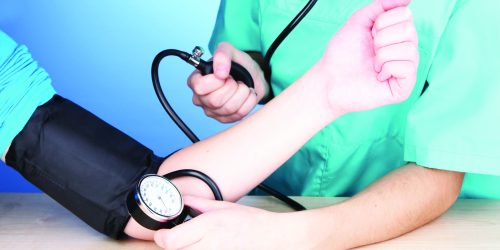
Exactly when do you go from having risk factors to having heart disease? Here is some information on the tests a doctor uses to diagnose heart disease.
How is heart disease diagnosed
This page previews the kinds of diagnostic procedures you will likely encounter as your doctors strive to pinpoint the exact health condition affecting your heart’s performance.
Chest X-ray
An x-ray of the chest is useful for detecting:
- lung disorders (e.g. chest infections)
- signs of heart disease.
If you are having heart surgery, a chest x-ray will routinely be performed beforehand, and is often referred to during surgery.
Blood Test
Before heart surgery, a doctor or nurse will take blood samples – about 30 ml is required.
Echocardiogram
This is a painless and very useful test on the heart. Echocardiography uses ultrasound (sound waves) to create a picture of your heart.
The test is performed for a variety of reasons, such as:
- to evaluate heart sounds and heart size
- to assess how well the heart and valves are working.
Cardiac technicians perform the test in a laboratory, and the patient is awake. You can eat and drink before most echocardiograms.
The test normally takes about 30 minutes.
The technician places gel on your chest and moves a tool, similar to a hand-held microphone, to different places on your chest. The images of your heart are shown on a screen next to you, and the technician records them on a video as well as on paper.
Electrocardiogram (ECG)
An ECG is used to detect abnormal heart rhythms as well as sick or damaged heart muscle.
A nurse or ECG technician normally performs this simple, painless investigation. It takes about five minutes, and you can eat and drink as normal beforehand.
The nurse or technician will place electrodes on your chest, wrists and ankles. These record the electrical activity of the heart. The ECG is a print-out or ‘picture of the heart beat’, showing how the electrical pathway is working.
The doctor or nurse will discuss the results with you.
Exercise stress test
Exercise stress testing is used to evaluate how well your heart copes with the extra demands placed on it during exercise.
In comparison, a routine ECG is done when the heart is at rest.
A technician and nurse do the testing, and a doctor is also often present. It usually takes between 30 and 60 minutes.
You can eat and drink as normal before the test, but avoid a heavy meal beforehand, and wear loose clothing and comfortable walking shoes.
You will be asked to walk on a treadmill. The speed and gradient are increased every 2–3 minutes, depending on the reason for the test. You need to push yourself as hard as you can, to achieve a result that shows your true capabilities.
During the test your symptoms, blood pressure, heart rate, rhythm, ECG and exercise ability will be monitored. It you experience chest pain, undue breathlessness, fatigue or significant changes in blood pressure, heart rate or ECG, the test will be stopped.
Gated blood pool scan
This scan is used to learn how well the heart is pumping blood around the body.
The procedure is useful for assessing if there is any damage to the main pumping chambers of the heart after a heart attack, or in other heart disorders.
A small amount of radioactive material is injected into a vein in the arm, outlining the heart chambers and blood vessels. This allows the amount of blood pumped from the heart to be measured. The test can show how different segments of the heart wall are working.
Heart Scan
This test evaluates blood flow through the heart at rest and after exercise. It involves injecting a substance that is slightly radioactive.
In the 24 hours before the test, you should not have any food or drink containing caffeine (including tea, coffee, chocolate, cola or cocoa). Some medications may also be stopped 24 hours before the test. Consult your doctor about this.
On the morning of the test, you should not have breakfast, or anything to eat or drink (except water). Bring loose clothes and comfortable walking shoes or jogging shoes for walking on the treadmill.
During the test
The total time of the test is 4–5 hours.
ECG dots are attached to your chest and a small needle is inserted into a vein in your arm. This remains in place until the end of the test.
You then walk on a treadmill while your heart action and ECG are carefully monitored. (If you are unable to walk on the treadmill, a Persantin Sestamibi Heart scan may be ordered. The drug Persantin replaces the effect of exercise for this test, and acts by enlarging the arteries which supply blood to your heart.)
When your heart rate reaches the limit for your age, a small dose of Sestamibi will be given through the inserted needle and you will be asked to continue walking for one more minute. You should not notice any reaction from the injection.
Images (scans) of your heart will then be taken using a special camera. These show the distribution of blood supply to the heart muscle. It is important that you lie still during the scans.
After the initial images you should continue fasting, and must not exercise in any way for three hours. The images will then be repeated.
Sometimes extra pictures of the heart may need to be taken 18 hours later, the morning after the test.
Further analysis of this test is done by a computer, so no result is available at the time you go home. The result will be sent to your doctor.
Transoesophaegal Echo (TOE)
What is a transoesophaegal echo (TOE)?
A transoesophaegal echo (TOE) is a special type of heart ultrasound that involves taking pictures inside your oesophagus, which is the tube connecting your mouth to your stomach. As your oesophagus is close to the back of your heart this allows your doctor to see clear pictures of your heart.
What is a TOE Test?
Your aneasthetist will supervise your sedation during your TOE test. If you have had previous problems with an anaesthetic, or you have any severe allergies please inform the doctor as soon as possible.
During the test a small needle is inserted into the back of your hand so that intravenous medicine can be given to make you sleepy. Your throat will be sprayed with local anaesthetic to make it easier to swallow. A special mouthpiece will be put in your mouth to protect your teeth. The echo probe will be gently inserted into your oesophagus and pictures will be taken of your heart. The test will take between 15 to 30 minutes to complete.
Your pulse, blood pressure, rate and regularity of your heart beat and oxygen levels will be monitored during the test. If you doctor has any concerns, the test may be stopped. At the end of your test the probe will be removed.
Before Your TOE Test
For a successful test, it is very important not to eat or drink for six hours before your appointment time. Your usual medicines can be taken with a small sip of water or as directed by your doctor.
If you have problems swallowing, oesophageal narrowing, ulceration, bleeding or pouches in the oesophagus please advise the doctor before your test. If you have an artificial heart valve, abnormal heart valve or murmurs you do not require antibiotics before this test.
After Your TOE Test
After your test, your throat will feel numb for approximately two hours and you will not be able to eat or drink until the numbness goes away. You will feel sleepy after your test so please make sure you have someone who can drive you home from the hospital.